
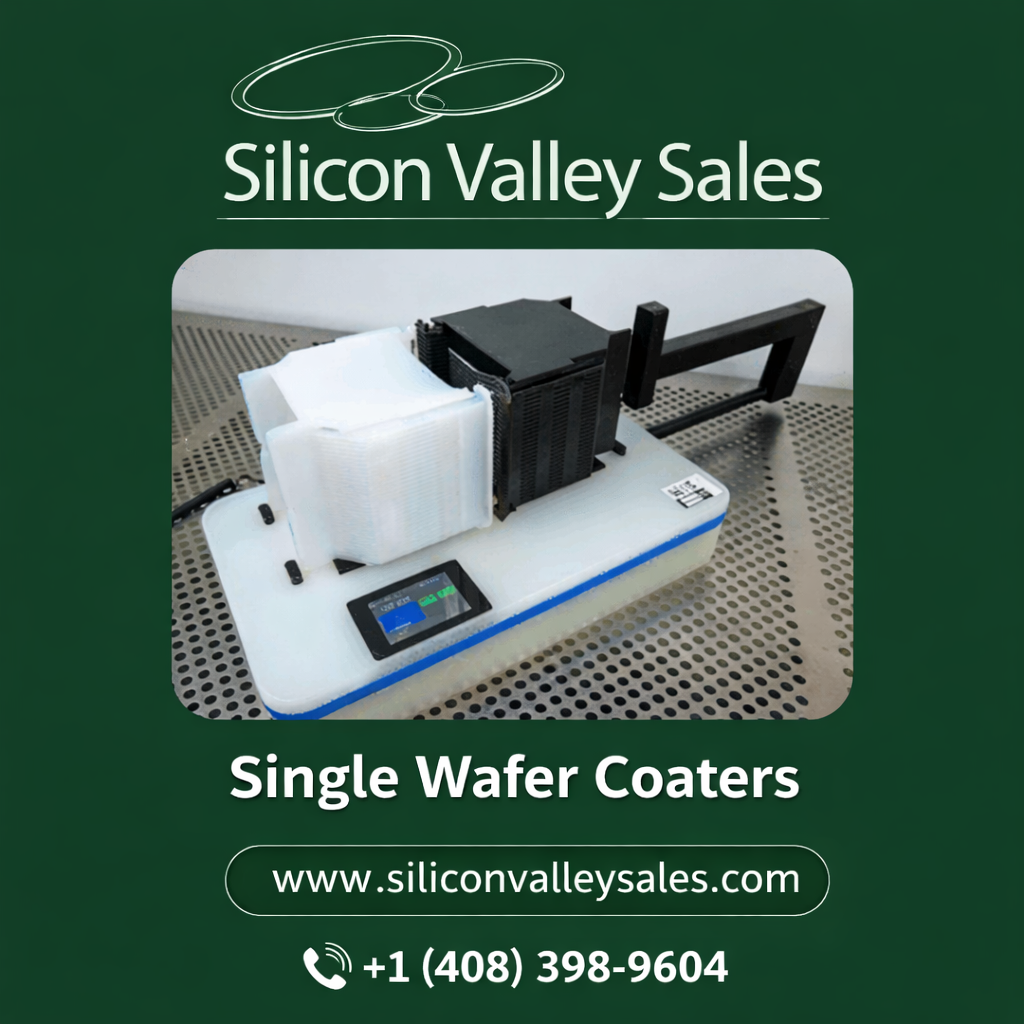
Chip fabrication leaves no room for sloppy work. A tiny flaw can ruin an entire batch. Photoresist coating sits at the core of lithography, and precision drives yield. Even a slight thickness shift can lead to pattern errors and costly scrap. Many fabs now rely on a single wafer processing tool to gain tighter control over each wafer. This shift reflects one clear goal. Improve coating accuracy, reduce waste, and push performance without cutting corners.
The Role of Photoresist in Modern Fabrication
Photoresist acts as a light-sensitive layer used to transfer circuit patterns onto wafers. It must spread evenly across the surface. If the film thickness varies, pattern transfer suffers. Uneven coating leads to line width variation, weak adhesion, or defects during etch.
So, accuracy is not just a nice feature. It is mission-critical. Every micron counts. Every spin cycle matters. As chip nodes shrink, tolerance margins shrink too. Traditional batch systems often struggle to maintain tight control across multiple wafers at once. And that is where process engineers start looking for smarter tools.
How Do Single Wafer Coaters Improve Uniformity?
Single wafer coaters focus on one wafer at a time. This may sound simple, but it changes the game. Processing wafers individually allows tighter monitoring and real-time adjustments. Operators can fine-tune spin speed, dispense volume, and bake time for each wafer.
Here is how they enhance accuracy:
• Precise resist dispense control
• Optimized spin speed profiles
• Real-time thickness monitoring
• Reduced cross-wafer contamination
• Better edge bead removal control
Because each wafer runs through a controlled cycle, variability drops. In batch systems, one small issue can affect many wafers. In single wafer systems, risk stays contained. As a result, yield improves and rework drops.
Why Does Individual Wafer Handling Matter?
Handling wafers one by one gives engineers more flexibility. They can adapt recipes based on wafer type, device structure, or resist chemistry. For advanced nodes, this flexibility helps a lot.
A single wafer processing tool also improves repeatability. Each wafer receives identical environmental conditions. Temperature, humidity, and airflow remain stable within the chamber. This stability leads to uniform film thickness across the surface.
In contrast, batch tools may face uneven heat distribution or airflow variation. Over time, such variation leads to coating drift. Single wafer systems reduce such drift and support tighter process windows.
How Do They Support Advanced Node Scaling?
As feature sizes shrink below 10 nanometers, uniform coating becomes harder to maintain. Even a small thickness variation can distort patterns. Advanced nodes require tighter process windows.
Single wafer coaters allow fine-tuning of spin curves and bake profiles. Engineers can experiment with new resist chemistries without risking large batches. This flexibility accelerates process development.
Also, advanced nodes demand cleaner environments. Individual wafer chambers help maintain stricter contamination control. In short, these tools align well with next-generation chip demands.
Final Thought
Accuracy in photoresist application drives yield, performance, and profit. Single wafer coaters offer tight control, lower defect rates, and stronger repeatability. As chip designs shrink and complexity rises, precise coating tools move from optional to essential. For fabs aiming to stay ahead, single-wafer technology provides a practical path toward higher accuracy and stable production.
Frequently Asked Questions
1. Are single-wafer coaters better than batch coaters for all applications?
They offer higher accuracy and better contamination control. However, some mature nodes may still use batch tools for cost reasons.
2. Do single-wafer systems increase production time?
Modern systems maintain strong throughput. Automation offsets the one-by-one approach.
3. How do they improve thickness control?
They control resist dispense, spin speed, and bake conditions for each wafer, reducing variation.
4. Are they suitable for advanced semiconductor nodes?
Yes. Their precision and flexibility support tight process windows in advanced fabrication.
5. Do they help reduce material waste?
Yes. Better control means fewer rejected wafers and lower resist waste.
Optimize Your Coating Process with Expert Guidance
Ready to refine your lithography process and improve wafer yield? Connect with Silicon Valley Sales for advanced equipment solutions and expert insight into high-performance coating systems. Their team can help you choose the right tools to boost precision, reduce defects, and support next-generation semiconductor manufacturing goals.